
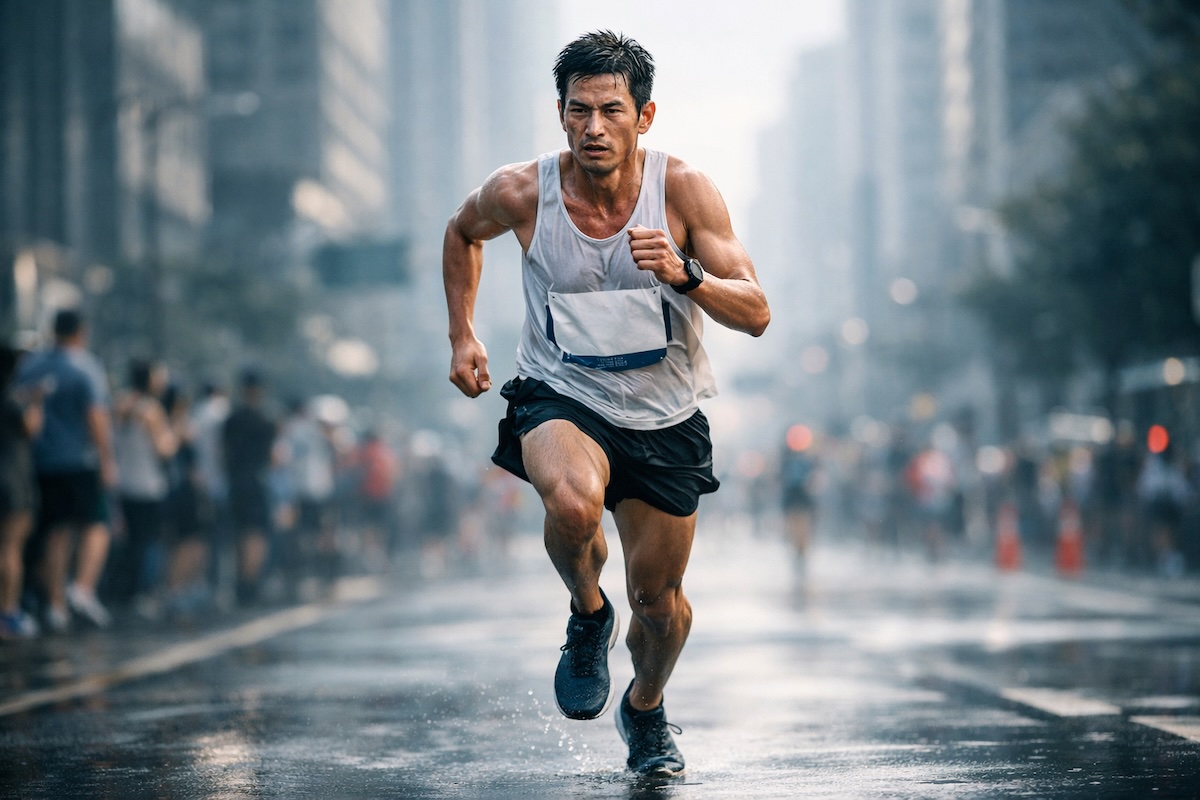

上週日(12/21)2026 臺北馬拉松賽事結束後,不管是老手還是初入馬拉松的新手,多少都會有身體疲勞、肌肉酸痛的問題,從 Betery 運動誌或好能自修室的 Google Search Console 裡,也看到一些找幫助恢復方法的搜尋。
我們透過研究用的 AI 工具,快速整理一些科學證據等級較高的方法,提供給身體還有些不適的你參考。
營養補給類
一、碳水化合物 + 蛋白質
這是基本不敗的解決方案,特別是剛完賽的那天,比賽期間與之後攝取足夠的碳水化合物能減少肌肉損傷的標記,以及主觀的疲勞感。賽後補充適量的蛋白質則能有效地幫助肌肉修復(1.6 ~ 2.0 g/kg/day)
二、酸櫻桃汁
比賽前 5 天、比賽後 2 天飲用酸櫻桃汁,可以降低 IL-6、CPR、尿酸等發炎指標、提高體內的抗氧化能力,可能有助於肌肉快速恢復
低強度「恢復跑」與活動
就常理的認知,激烈運動後應該就要好好的休息,不要亂動,但實際上還是要稍微動一下會比較好。研究發現比賽後 48 小時內做點中等強度(大概在 LT1)的慢跑,在之後的一週,肌肉損傷不會進一步惡化,同時還能促進神經肌肉功能的恢復。
物理手段:效果大多來自於客觀覺得變好了
在這部分的有效,大多是自己覺得有效的成分比較大,在生理數據上來看,可能就不是那麼的明顯了或是研究規模還不夠,例如浸泡在冷水浴裡、壓縮衣、按摩、不穩定搖擺鞋…等。
激烈運動後,要過多久才會恢復?
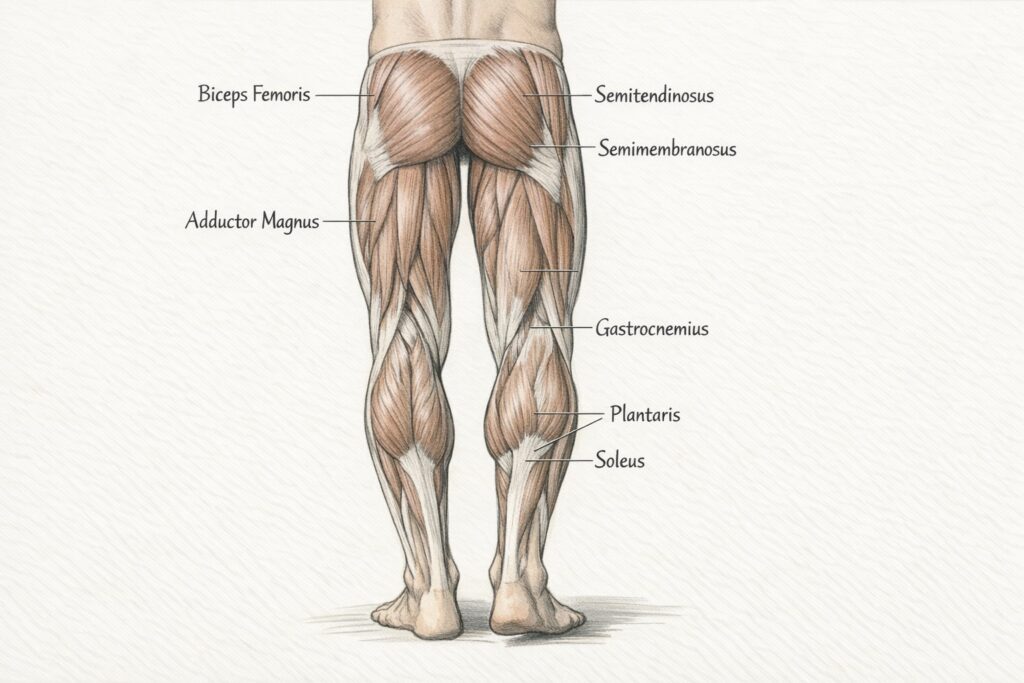
肌肉損傷與發炎指標,例如肌酸激酶(Creatine Kinase, CK)、C 反應蛋白(CRP)等,通常要 4 到 8 天,甚至更久一點才能恢復到正常水準。此外,有些肌肉,例如腿後側肌群遠端(股二頭肌),就至少需要一週的時間才能恢復正常。心臟與其他器官的生物指標,大多在 1 到 4 週內恢復。
結論
最後,關於馬拉松、鐵人三項或是長距離自行車運動後的恢復沒有「快速解方」。
就目前為止,最有實證的做法是:充足的碳水與蛋白質補充、良好水分與電解質、比賽後 48 小時開始低強度跑步或活動,再加上你覺得舒服的被動恢復手段(冷水、壓縮衣、按摩等),並給身體至少一到兩週的時間逐步恢復訓練強度。
使用 AI 工具:Consensus.app
Tiller, N., Tiller, N., Roberts, J., Beasley, L., Chapman, S., Pinto, J., Smith, L., Wiffin, M., Russell, M., Sparks, S., Duckworth, L., O’Hara, J., Sutton, L., Antonio, J., Willoughby, D., Tarpey, M., Smith‐Ryan, A., Ormsbee, M., Ormsbee, M., Astorino, T., Kreider, R., McGinnis, G., Stout, J., Smith, J., Arent, S., Campbell, B., & Bannock, L. (2019). International Society of Sports Nutrition Position Stand: nutritional considerations for single-stage ultra-marathon training and racing. Journal of the International Society of Sports Nutrition, 16. https://doi.org/10.1186/s12970-019-0312-9.
- Howatson, G., McHugh, M., Hill, J., Brouner, J., Jewell, A., Someren, K., Shave, R., & Howatson, S. (2010). Influence of tart cherry juice on indices of recovery following marathon running. Scandinavian Journal of Medicine & Science in Sports, 20. https://doi.org/10.1111/j.1600-0838.2009.01005.x.
- Braschler, L., Nikolaidis, P., Thuany, M., Chlíbková, D., Rosemann, T., Weiss, K., Wilhelm, M., & Knechtle, B. (2025). Physiology and Pathophysiology of Marathon Running: A narrative Review. Sports Medicine – Open, 11. https://doi.org/10.1186/s40798-025-00810-3.
- Ignacio, M., Antonio, M., Carlos, H., Barbara, H., Nayara, P., & Eladio, C. (2020). The week after running a marathon: Effects of running vs elliptical training vs resting on neuromuscular performance and muscle damage recovery. European Journal of Sport Science, 21, 1668 – 1674. https://doi.org/10.1080/17461391.2020.1857441.
- Wilson, L., Cockburn, E., Paice, K., Sinclair, S., Faki, T., Hills, F., Gondek, M., Wood, A., & Dimitriou, L. (2017). Recovery following a marathon: a comparison of cold water immersion, whole body cryotherapy and a placebo control. European Journal of Applied Physiology, 118, 153-163. https://doi.org/10.1007/s00421-017-3757-z.
- Laily, I., Van Steijn, N., Wiggers, T., Froeling, M., Planken, R., Verwijs, S., De Haan, F., Motazedi, E., Verhagen, E., Jørstad, H., & Bakermans, A. (2025). Prospective evaluation of potential detrimental cardiac effects in middle-aged male novice marathon runners. European Journal of Preventive Cardiology. https://doi.org/10.1093/eurjpc/zwaf236.415.
- Higashihara, A., Nakagawa, K., Inami, T., Fukano, M., Iizuka, S., Maemichi, T., Hashizume, S., Narita, T., & Hirose, N. (2020). Regional differences in hamstring muscle damage after a marathon. PLoS ONE, 15. https://doi.org/10.1371/journal.pone.0234401.